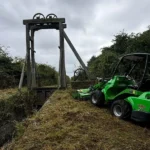
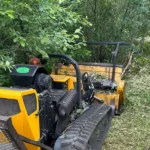
Hidden beneath a dense layer of overgrowth, a fascinating piece of canal history was waiting to be uncovered. This project brought us to a forgotten stretch of waterway where a weathered timber structure (once a vital part of the lock system) had been engulfed by nature. The goal? Clear the site to allow for a safe and thorough inspection, without disturbing the fragile remains of this industrial relic.
🛠️ The Challenge
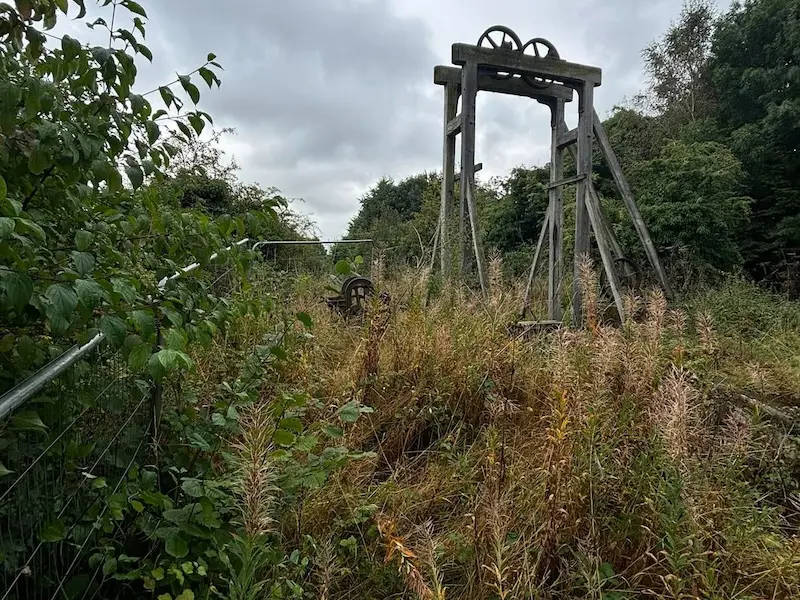
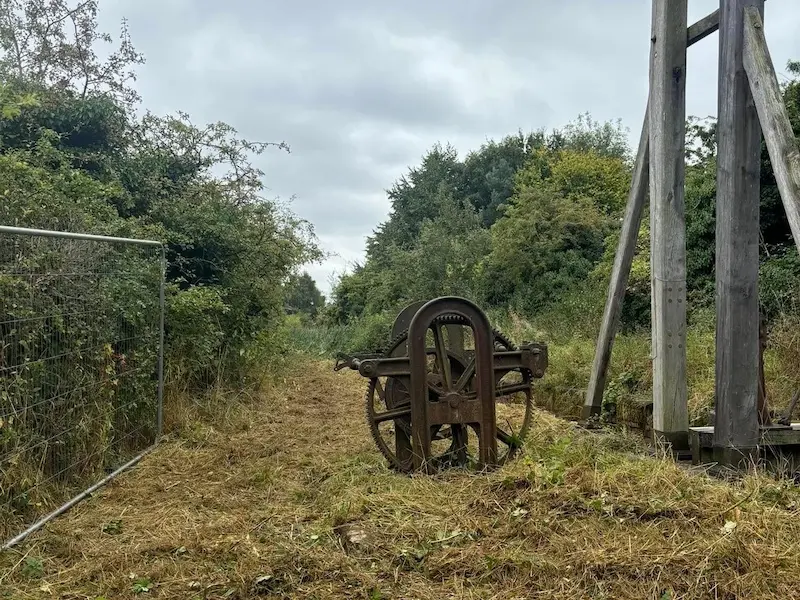
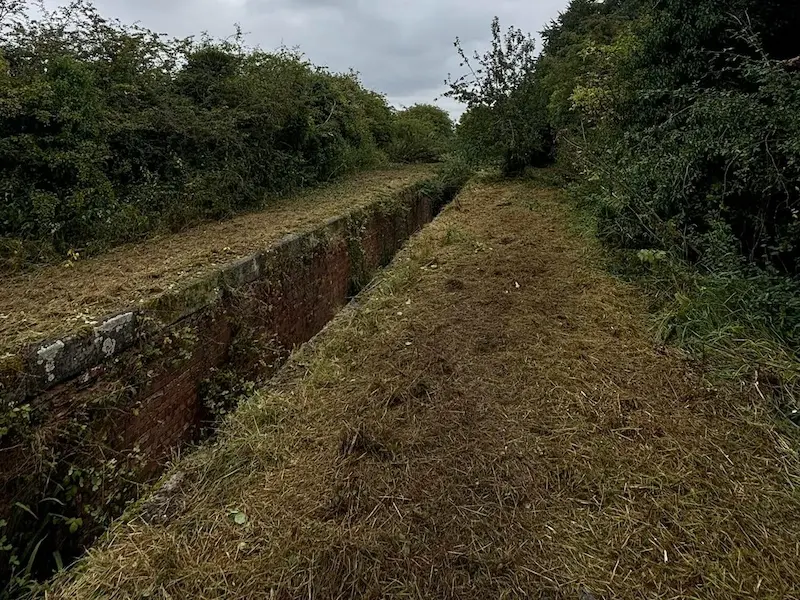
This wasn’t your average clearance job. The site was tucked along a narrow towpath, lined with brambles, saplings, and waist-high grass, all surrounding a wooden lifting frame with iron pulleys still intact. Time, weather, and nature had done their part to reclaim the area, making machinery access tight and hazardous. Beneath the brush, an old canal lock — with hidden voids and unstable ground — added another layer of complexity.
We had to think smart, act carefully, and use the right tools for the job.
🌱 Tools of the Trade
To handle the bulk of the vegetation quickly and efficiently, we brought in the Avant loader — a compact, powerful green workhorse — equipped with a mulching head attachment. This proved ideal for chewing through thick overgrowth without damaging the terrain.
But machines have their limits, especially when history is involved.
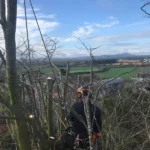
For the sensitive spots — around the timber structure, pulleys, and near canal edges — we switched to manual tools:
- A chainsaw to deal with larger woody stems and saplings.
- A brushcutter to finesse the final clean-up and edge detailing.
🚧 Precision Meets Preservation
One of the most important aspects of this job was protecting the heritage structure. With each pass of the mulcher, we left a buffer zone around the timber frame. These zones were then carefully cleared by hand to avoid any mechanical damage.
Equally tricky was the terrain itself — overgrown ground that looked flat often concealed uneven surfaces, dips, or gaps near the lock wall. We navigated cautiously, mapping out safe zones for machine movement and keeping human access well planned.
✅ The Outcome
In just a short span of time, the site was transformed on time and within budget. The lifting frame — once barely visible — stood proud, and the full length of the canal lock was now accessible for inspection. With vegetation cut down to ground level, engineers and surveyors could safely assess the structural condition.
And just as importantly, no harm came to the historic features that made the site special in the first place.
💡 Lessons & Reflections
This project reminded us of the importance of balancing efficiency with sensitivity. Clearing a site like this isn’t just about brute force — it’s about understanding the environment, respecting the history, and using the right tools for the right areas. Whilst we endeavour to mechanise as much of our work as possible, there will always be a place for manual labour on more sensitive jobs such as this.
Clearing this forgotten lock wasn’t just a job — it was a privilege. There’s something deeply satisfying about revealing what’s been hidden, especially when it tells a story from the past. If you’re working with heritage sites or complex landscapes, let this serve as a reminder: good clearance work doesn’t just open up space — it opens up history.